
WELCOME BONUS 300%
UP TO €2000 + 100
FREE SPINS
UP TO €2000 + 100
FREE SPINS
Home → Blackjack
Blackjack at Trada: Variants, Rules and Payouts
Infinite Blackjack uses the Six Card Charlie
Infinite Blackjack, offered by Evolution, allows an unlimited number of players at the table. This variation of blackjack presents several side bets, including Any Pair, 21+3, Hot 3, and Bust It. The theoretical return to player (RTP) for Infinite Blackjack is 99.47% when played with optimal strategy.
The Six Card Charlie rule, present in some blackjack variants, states that a player who draws six cards without busting, even if their total exceeds 21, wins against the dealer unless the dealer has a blackjack. This rule can significantly improve a player's odds, reducing the house edge.
While Infinite Blackjack by Evolution offers a high RTP of 99.47%, the presence of the Six Card Charlie rule would further enhance player returns. Players should consult the specific game rules at the table to confirm the inclusion of this advantageous rule, as it directly impacts the house advantage.
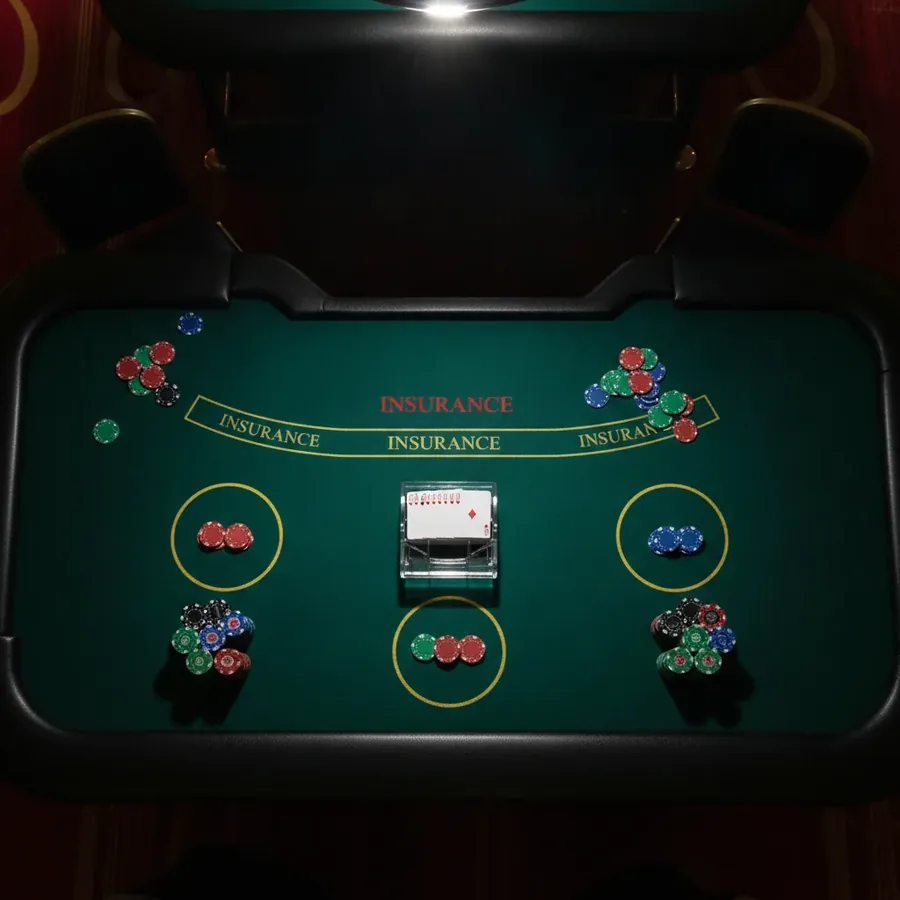
Side Bet Every Round: Budget Lasts 30 Rounds
A player with a bankroll of €1,000, betting €10 per hand, would exhaust their budget in 100 rounds if no winnings are secured. However, if a player dedicates 10% of their bankroll, or €100, to side bets on each of the 100 hands available, this budget would be depleted significantly faster.
If a player consistently wagers €10 on side bets per hand, their €1,000 bankroll would last approximately 100 rounds, assuming no additional wins from the main game. When this bet amount is increased to €20 per hand, the budget would only support 50 rounds of play.
The side bets available in Infinite Blackjack, such as Any Pair, 21+3, Hot 3, and Bust It, can increase the overall betting activity. For a player with a €1,000 bankroll, betting €33.33 on side bets each round would mean the budget lasts for 30 rounds, demonstrating the impact of consistent side bet participation.
Bet two percent of bankroll per hand
Betting two percent of a €1,000 bankroll translates to a €20 wager per hand. If a player adheres strictly to this strategy, their bankroll would theoretically last for 50 hands if no winning hands occur. This disciplined approach helps manage losses over extended play sessions.
This two percent strategy is a common bankroll management technique. For example, if a player has a €2,000 bankroll, a two percent bet would be €40 per hand. This allows for a greater number of hands played before the entire bankroll is at risk, assuming no wins.
Consider a player with a €500 bankroll. Betting two percent per hand means a €10 wager. This strategy allows for 50 hands of play before depletion, assuming no successful outcomes. The focus remains on extending playtime and minimizing the impact of short-term losses.
Splitting tens costs expected value: better stand
In blackjack, splitting tens is generally not advised as it reduces the expected value of the hand. A hand totaling 20 is a very strong position against the dealer. By splitting tens, a player breaks this strong hand into two potentially weaker ones.
The rule variation 'Blackjack 6:5, Gewinn 1:1' indicates a payout of €12 for a €10 bet on a blackjack, instead of the standard €15. This change alone adds 1.39 percentage points to the casino's advantage. This demonstrates how specific rule modifications significantly alter the game's fairness.
For instance, the 'Blackjack 6 Decks, S17, DAS, DOA, Auszahlung 3:2, Basisstrategie' scenario presents a house edge of 0.46% with an RTP of 99.54%. This is a favorable setup, but splitting tens, even in such a liberal game, can still negatively impact the expected return compared to standing on 20.
What Hole Card Means at a Live Table
At a live blackjack table, the dealer's hole card is the card dealt face down. Its value is critical for players to make informed decisions regarding hitting, standing, doubling down, or splitting their hands. The RTP for 'Blackjack Insurance / Versicherung' is 92.53%, indicating a significant house edge on this side bet.
Understanding the potential value of the dealer's hole card is key to basic strategy. For example, if the dealer shows an Ace, the 'Blackjack Insurance / Versicherung' side bet offers a payout of 2:1. However, the overall RTP of 92.53% shows this is a disadvantageous bet for most players.
The 'Blackjack 6:5 statt 3:2' rule, which pays 6:5 instead of the traditional 3:2, increases the house edge by 1.39%. This rule, combined with an unfavorable hole card for the player, further shifts the game's dynamics. Players should aim for tables with the 3:2 payout for better long-term results.
Blackjack variants at a glance
| Variant | Payout | House edge | Rule | Bet range |
|---|---|---|---|---|
| Blackjack Surrender (Late Surrender) – Regel-Effekt | n.a. (Regel-Modifikator) | −0.08 Prozentpunkte | Spieler gibt Hand nach Dealer-Blackjack-Prüfung auf, verliert die Hälfte des Einsatzes. Verbessert RTP um ca. 0.08 Prozentpunkte. Early Surrender ist wesentlich wertvoller (bis −0.6 Prozentpunkte), aber extrem selten. | Rückzahlung 50% des Einsatzes |
| Blackjack 6 Decks, S17, DAS, DOA, Auszahlung 3:2, Basisstrategie | 99.54% | 0.46% | Dealer steht auf Soft 17; Verdopplung auf jeder Zweierkarte; Verdopplung nach Split erlaubt; keine Aufgabe. Basisstrategie ist für diesen Wert zwingend | Blackjack 3:2, normaler Gewinn 1:1, Insurance 2:1 |
| Blackjack Liberal Vegas Strip (liberale Regeln, 3:2) | 99.72% | 0.28% | Günstigste Regelkombination: S17 + DAS + Resplit + Late Surrender. Standardabweichung 1,15 | Blackjack 3:2, Gewinn 1:1 |
| Blackjack Ein Deck, klassische Regeln, 3:2 | 99.85% | 0.15% | Weniger Decks = niedrigerer Vorteil; ein Deck gibt ca. −0.48 Prozentpunkte gegenüber 8 Decks. Oft durch 6:5 Auszahlung kompensiert. | Blackjack 3:2, Gewinn 1:1 |
| Blackjack Auszahlung 6:5 statt 3:2 (6 Decks) | 98.15% | 1.85% | Ersatz von 3:2 durch 6:5 fügt exakt +1.39 Prozentpunkte zum Vorteil des Casinos hinzu – stärker als jede andere Regeländerung. Bei $10 Einsatz zahlt Blackjack $12 statt $15. | Blackjack 6:5, Gewinn 1:1 |
| Blackjack Split / Double / H17 – Regel-Effekte | n.a. (Regel-Modifikatoren) | H17 +0.22 Prozentpunkte; RSA −0.08 Prozentpunkte; DAS −0.14 Prozentpunkte | Dealer Hits Soft 17 verschlechtert RTP um 0.22 Prozentpunkte; Resplit Aces verbessert um 0.08 Prozentpunkte; Double After Split verbessert um ca. 0.14 Prozentpunkte; 6 Decks statt 8 – ca. 0.02 Prozentpunkte. | Double – Einsatz ×2 mit einer Karte; Split – bis 4 Hände; Ass-Split meist mit einer Karte. |
Blackjack Contributes Only 10 Percent to Wagering
Blackjack games at Trada Casino contribute only 10% to the wagering requirements of bonuses. This means that for every €100 wagered on blackjack, only €10 will count towards fulfilling the bonus turnover. For example, to clear a €2,000 welcome bonus with a 40x wagering requirement, a player would need to wager €80,000 in total.
Conversely, slots contribute 100% to wagering requirements. Therefore, to meet the same €80,000 turnover for the €2,000 welcome bonus, a player wagering exclusively on slots would only need to wager €2,000. This significant difference in contribution rates means players focusing on blackjack will need to play substantially more hands to clear bonuses.
This disparity directly impacts the eligibility of blackjack play for bonus funds. Players aiming to utilize the 300% welcome bonus up to €2,000 will find their blackjack wagers less effective in reducing the total wagering target. Consequently, a player would need to wager €40,000 on blackjack tables to meet the €4,000 wagering requirement associated with a €1,000 bonus.
Six Card Charlie Pays Immediately with Six Cards
The 'Six Card Charlie' rule, present in some blackjack variants, dictates an automatic win if a player achieves a total of six cards without exceeding 21. This rule acts as a payout condition that can be triggered by a sequence of draws, irrespective of the dealer's hand. It offers an alternative path to winning beyond achieving a higher score than the dealer.
The standard payout for blackjack is 3:2, meaning a €10 bet returns €15. However, the Six Card Charlie rule provides a win based on card count, not just the final score, which can be advantageous.
Understanding this rule is crucial for players engaging with blackjack tables where it is offered. It introduces an additional layer of strategy and potential for wins, especially in scenarios where the player's hand might otherwise be at a disadvantage. The primary consequence for the reader is an increased opportunity to win hands based on card accumulation.
Double Down after Split: which tables allow it
The ability to Double Down after Split (DAS) is a significant rule variation in blackjack, impacting player strategy and house edge. This option allows a player to double their bet after a split hand, receiving only one more card. For example, if a player splits two 8s and then receives a 3, they can double their bet on that hand.
The presence of DAS generally lowers the house edge. For instance, the Blackjack 6 Decks variant, which allows DAS, has a house edge of 0.46% with an RTP of 99.54%. In contrast, a similar game without DAS might have a slightly higher house edge. The rule contributes approximately -0.14 percentage points to the house edge.
Players should identify tables explicitly stating 'DAS' or 'Double After Split' to take full advantage of this rule. This flexibility in betting strategy is particularly beneficial when a player has a strong initial hand after splitting, offering an opportunity to increase potential winnings. The consequence for the reader is enhanced strategic options and potentially better returns.
Card Counting at Shuffle Master Table: why it fails
Card counting strategies are significantly hampered at Shuffle Master tables due to the continuous shuffling machine (CSM) employed. A CSM constantly shuffles the cards after each hand or with very few cards played. This process ensures that the composition of the remaining deck is unpredictable, making it impossible for card counters to gain an accurate reading of the deck's state.
The Shuffle Master system, by its nature, negates the advantage card counters seek. Traditional card counting relies on tracking the ratio of high to low cards remaining in the shoe to make informed betting decisions. When cards are continuously shuffled, this information becomes inaccessible, rendering card counting ineffective. The house edge remains consistent, as designed.
For players employing card counting techniques, tables utilizing Shuffle Master or similar continuous shuffling mechanisms are essentially unplayable for advantage purposes. The primary consequence for the reader is that employing card counting strategies at such tables will not yield the expected positive return on investment. The house edge remains at its standard level, typically around 0.46% for games with good rules.
Infinite Blackjack vs Classic Seven-Seat Table
Infinite Blackjack, offered by Evolution, provides an unlimited number of playing positions at the table, unlike classic seven-seat blackjack tables. This means every player receives identical starting cards, regardless of how many people are playing. The game also features four optional side bets: Any Pair, 21+3, Hot 3, and Bust It, offering additional betting opportunities.
The RTP for Infinite Blackjack, when playing with optimal strategy, is 99.47%. This is a competitive rate, comparable to many classic blackjack variants. For example, Blackjack 6 Decks with optimal strategy has an RTP of 99.54%. The primary difference lies in the player capacity and the availability of multiple side bet options on Infinite Blackjack.
A classic seven-seat blackjack table, such as Blackjack 6 Decks, has a fixed number of players and typically fewer side bet options. The consequence for the reader is that Infinite Blackjack offers a more accessible game for players who might otherwise struggle to find a seat, along with diverse betting avenues. However, the core blackjack RTP remains very similar to its classic counterpart.
When can you increase your bet?
An increase in bet size is directly tied to the potential payout in Blackjack Liberal Vegas Strip, which offers a 3:2 payout for a blackjack. With a RTP of 99.72% and a house edge of 0.28%, this game features favourable rules such as S17, DAS, Resplit, and Late Surrender. This configuration allows for a standard deviation of 1.15, meaning bet increases are supported by a strong theoretical return.
In contrast, Blackjack games offering a 6:5 payout instead of 3:2 significantly alter the player's advantage. For instance, a 6-deck game with a 6:5 payout has a RTP of 98.15%, increasing the house edge to 1.85%. This change means a 10 EUR bet on a blackjack only returns 12 EUR, compared to 15 EUR at a 3:2 table, making larger bets less favourable.
The 'Insurance' side bet in Blackjack, often available with 6-8 decks, carries a substantial house edge of 7.47% and a RTP of 92.53%. This bet, which can be up to 50% of the main bet when the dealer shows an Ace, is generally advised against by basic strategy unless card counting indicates a true count of +3 or higher. Its poor odds make increasing bets on this particular wager inadvisable.
Live Table vs RNG Table: Speed and Limits
Live dealer games at Trada Casino offer distinct speed and betting parameters, exemplified by Quantum Blackjack Plus Live from Playtech. This title supports stakes ranging from 1 EUR to 5,000 EUR, with RTP at 99.57% under optimal strategy, and features quantum multipliers up to 1,000x on three-card 21s. The live environment provides a social dynamic alongside the betting limits.
Evolution's Blackjack Party presents a different live experience, focusing on atmosphere with two hosts, while maintaining a betting range of 1 EUR to 1,000 EUR. Infinite Blackjack, also from Evolution, offers unlimited player seats and a variety of side bets like Any Pair and 21+3, with stakes from 1 EUR to 5,000 EUR and a RTP of 99.47%. These live options cater to various player preferences within defined betting structures.
The limits at Trada Casino's live tables, such as the 1 EUR to 5,000 EUR range for Infinite Blackjack, provide substantial flexibility for players to manage their bet sizes according to their strategy and bankroll, irrespective of the RNG pace.
Even Money only possible with Dealer Ace
The concept of 'even money' in blackjack, where a player's blackjack is paid 1:1 instead of the standard 3:2, is typically offered in specific scenarios, often when the dealer's upcard is an Ace. This payout structure significantly reduces the player's return on a winning blackjack hand. For example, a 10 EUR bet would yield 10 EUR profit instead of 15 EUR.
Blackjack Insurance, a side bet available when the dealer shows an Ace, pays 2:1. However, the underlying RTP for this bet is a low 92.53%, with a house edge of 7.47%. This means that, on average, for every 100 EUR wagered on insurance, 7.47 EUR is retained by the casino, making it a disadvantageous proposition for most players.
The primary blackjack variant mentioned, Blackjack Liberal Vegas Strip, offers a favourable 3:2 payout for a natural blackjack, contributing to its high RTP of 99.72%. This specific game's rules, including S17, DAS, Resplit, and Late Surrender, are designed to minimise the house edge and maximise player returns, making the standard 3:2 payout the norm for winning blackjacks.
Split, Double Down, and Surrender in Numbers
The rules concerning splitting, doubling down, and surrendering can significantly impact the house edge in blackjack. For instance, the rule allowing 'Double After Split' (DAS) decreases the house edge by approximately 0.14 percentage points. This means that being able to double your bet after splitting a pair offers a slight advantage to the player.
Surrendering, specifically 'Late Surrender', allows a player to forfeit half their bet after the dealer checks for blackjack, reducing the house edge by about 0.08 percentage points. While 'Early Surrender' is more beneficial, offering up to a 0.6 percentage point reduction, it is rarely found. The option to surrender provides a strategic way to mitigate losses.
In Blackjack Liberal Vegas Strip, the ability to Resplit pairs improves the RTP by 0.08 percentage points, and the 'Double Down' option, which allows the player to double their stake after receiving their first two cards (and receive one more card), further enhances player returns. These functionalities, combined with a 3:2 blackjack payout and a 99.72% RTP, create a highly favourable game for the player.
How long do 100 EUR last at a 1 EUR table?
At a blackjack table with a 1 EUR bet per hand, 100 EUR could theoretically last for 100 individual hands if no winnings were generated and each bet resulted in a loss. However, the actual duration is influenced by the game's RTP and the player's betting strategy, with a 99.72% RTP blackjack offering a very low house edge.
Considering a game like Blackjack Liberal Vegas Strip with a 99.72% RTP and a 0.28% house edge, a 100 EUR bankroll at 1 EUR per hand would experience losses at a slow rate. The house advantage means that, on average, only 0.28 EUR is lost for every 100 EUR wagered over the long term, suggesting a prolonged playing session.
The contribution of table games to bonus wagering requirements is typically 10%, meaning only 10 EUR of every 100 EUR wagered on blackjack would count towards clearing a bonus. This lower contribution rate means that while the 100 EUR may last many hands, clearing a bonus with table game play takes considerably longer than with slots, which contribute 100%.
Contact
Live - online chat
Banking









Providers












Trada Casino 2026